Program Description: Master of Arts (MA)
The aim of the program is to provide specialised knowledge and develop skills so that graduates are able to design, organise and evaluate adult education program, as well as to teach in them, using modern educational and distance learning methods.
The objectives of the program are for students to understand and be able to apply contemporary theories of adult education, as well as the theoretical framework for the design and organisation of adult education program, so that they can become adult education trainers or managers with a high level of knowledge, skills and competences and be able to contribute effectively in the field of Lifelong Learning.
ECTS: 120
The minimum duration of study is two (2) academic years.
Classification according to Unesco code ISCED-2011:
- by education sector: 14 Teaching training & education science
- by level of study: 7
Classification according to Unesco code ISCED-2013:
- by training sector: 0111-Education science
Language of Instruction: The language of instruction of the program is Greek.
QUALITY POLICY *
QUALITY INDICATORS 2026 *
*The above files are currently available in Greek.
Upon completion of the program, students are expected to be able to:
- Understand the socio-economic function of adult education in the national and European context.
- Deepen their understanding of the basic – and in particular contemporary – theories of adult education.
- Understand the applicability of the principles and methods of adult education, the coordination of the learning group, the planning, organisation and evaluation of adult education programmes.
- They apply the basic theories of adult education in the written work produced, in the micro-teaching sessions during face-to-face meetings and through participation in a wide range of conferences, conferences, workshops, national teacher training programmes and European programmes.
- They apply innovative practices in training and coordination of groups of trainees.
- Understand the methodology of educational research in order to be better able to prepare written and dissertation work, as well as to make use of research data and develop research activities in the context of their professional responsibilities.
- They are equipped to develop critical and creative thinking
The Post-graduate programme accepts graduates of higher institution diplomas. The programme is offered in Greek.
The knowledge of a foreign language and good computer-Internet skills would be useful for the successful participation in the programme.
Note:
Holders of a degree or diploma of higher education means graduates of Greek Universities or Polytechnics or Higher School of Fine Arts or Higher School of Pedagogical and Technological Education or Higher Technological Educational Institutions (ATEI) or those who hold academically equivalent first cycle degrees from recognized foreign educational institutions with the degrees awarded by the Greek Higher Educational Institutions, in accordance with the provisions of article 304 of Law No. 4957/2022 (Government Gazette 141/21.07.2022, vol.)
Clarification regarding foreign academic institutions
When evaluating an application to a Postgraduate Study Programme, the University will examine whether the candidate’s institution of study is included, or is eligible to be included, in the National Registry of Recognized Foreign Higher Education Institutions, and whether the candidate’s degree is included, or is eligible to be included, in the National Registry of Degree Types Awarded by Recognized Foreign Institutions. If the degree is listed under Article 307 of Law 4957/2022, the Hellenic Open University is required to request a “Certificate of Place of Study”, which must be issued and sent directly by the foreign university. If the certificate confirms that the place of study, or any part of the studies, took place within Greek territory, the degree cannot be recognized—unless the portion of studies completed in Greece was carried out at a public Higher Education Institution or at a recognized foreign educational institution, as defined in point (b) of Article 299 of Law 4957/2022.
The program “Adult Education” is structured in two (2) academic years, which include for the award of the Postgraduate Diploma of Specialisation either the successful completion of five (5) units or the successful completion of four units and the successful completion of the post-graduate thesis. The minimum duration for the completion of the programme is two (2) years. The total number of credits (ECTS) required for the award of the Postgraduate Diploma of Specialisation is 120 ECTS.
The structure of the program
1st Year
2nd Year
In addition, students may choose to either attend the EKE54 (“Adults in Open and Distance Education”) or to prepare a dissertation, as follows:
OR
Declaration instructions for the Thematic Units
In the first (1st year), if you choose one (1) units, you must choose EKE50. If you choose two units you choose EKE50and one of EKE51 or EKE53, and if you choose three units you choose EKE50, EKE51 and EKE53.
In the second year, if you choose one unit you must choose EKE52.
To take EKE52 you must have completed EKE50 and either completed EKE51 or taken EKE51 at the same time as EKE51.
Also, in the 2nd year, you must choose EKE52 and EKE54 or EKE52 and dissertation.
You can register for the dissertation either at the same time as EKE52 or after completion of EKE52.
The presentation of the Dissertation Thesis will take place after the successful completion of the thesis required by the program.
In the process of declaring units, the units of the previous year must be exhausted first and then the declaration of the next year’s units must begin.
In order to complete the program in two academic years, you must successfully complete during the first year of study three units and during the second year either the last two units or one unit in parallel with the Master’s Dissertation, according to the above instructions.
Director of the Program
George A. Koulaouzides, Associate Professor
Subject: Methodology of Adult Education
e-mail: gkoulaouzidis@eap.gr
Coordinators
| EKE50 |
KOULAOUZIDES |
GEORGE |
CV |
| EKE51 |
PAVLI KORRE |
MARIA |
CV |
| EKE52 |
VAIKOUSSI |
DANAI |
CV |
| EKE53 |
KOUTOUZIS |
MANOLIS |
CV |
| EKE54 |
VITOULIS |
MICHAEL |
CV |
With the aim of continuously enhancing the quality of the MA in Adult Education at the Hellenic Open University (HOU), the University Senate has decided to establish an External Advisory Committee. The Committee’s mission is to contribute, through advisory input, to the strategic development and ongoing renewal of the programme’s structure and content, in line with contemporary developments in the field of adult education. It will also support the programme’s international networking, strengthen its outward orientation, and foster closer links with the research community, society, and professionals in the field.
The members of the External Advisory Committee are:
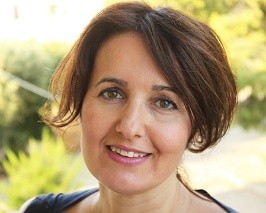 |
Alexandra Ioannidou
DIE – Leibniz Centre for Lifelong Learning, Germany
|
| Dr Alexandra Ioannidou studied Philosophy, Education and Psychology at the Aristotle University of Thessaloniki and later specialised in Adult Education and Intercultural Education in Germany, completing her PhD at the University of Tübingen. During her career she has worked across several sectors and countries. She has served as an Advisor to the Greek Ministry of Education and Research, a member of the Governing Board of CEDEFOP, an expert in advisory committees of the European Commission and in OECD projects, and a member of the Board of the European Society for Research on the Education of Adults (ESREA). For several years she also taught in the Master’s Programme in Continuing Education and Lifelong Learning at the Open University of Cyprus. She currently works at the German Institute for Adult Education (DIE – Leibniz Centre for Lifelong Learning), where she coordinates international research projects, and she is a member of the Kuratorium of DVV International. |
|
 |
Sophia Chatzigianni
Adult Education Consultant, Germany
|
| Ms. Sophia Chatzigianni worked for many years at UNESCO’s Institute for Lifelong Learning (UIL), where she was involved in the development of quality learning ecosystems. She specialises in adult education and lifelong learning, with particular emphasis on the empowerment and professional development of adult educators. She has contributed to initiatives promoting social inclusion and access to learning for vulnerable groups. She holds a Master’s degree in Adult Education and Lifelong Learning from the University of Macedonia and a degree in Philosophy and Education from the Aristotle University of Thessaloniki. Before joining UNESCO, she worked in Greece as an adult educator in non-formal education and training contexts. She currently works as a consultant in adult education programme development. |
|
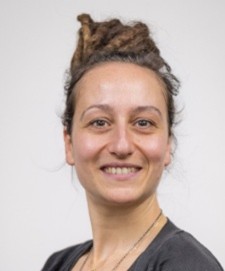 |
Melpomeni Papadopoulou
Université de Tours, France
|
| Dr Melpomeni Papadopoulou is Maître de conférences at the Université de Tours in the Department of Education Sciences. Her work focuses on innovation in teaching and learning support in higher education. She also serves as Vice-Rector of the University of Tours with responsibility for pedagogical innovation. She holds a PhD in Education Sciences and has specialised in adult learning processes and educational innovation. She has participated in numerous research projects and international conferences promoting the development of contemporary educational practices. |
|
 |
Angeliki Grivopoulou
Second Chance School of Mesolongi, Greece
|
| Dr Angeliki Grivopoulou-Hatzí is an educator with extensive experience in adult education and Director of the Second Chance School of Mesolongi. She holds a PhD from the University of the Peloponnese on “The development of social skills and transformative learning in adults: the case of Second Chance Schools.” Her academic background includes a degree in Early Childhood Education and studies in Informatics at the Technological Educational Institute of Mesolongi. She has many years of experience in vocational education and has worked on integrating information and communication technologies (ICT) into teaching. Her research focuses on adult education, social literacy, transformative learning, and the use of digital tools in education. She is President of the Panhellenic Association of Directors of Second Chance Schools. |
|
 |
Anthí Kyriakopoulou
CEDEFOP, Greece
|
| Dr Anthí Kyriakopoulou works as an Expert at the European Centre for the Development of Vocational Training (CEDEFOP), specialising in policies and systems of initial and continuing vocational education and training, as well as their quality assurance. She holds a PhD in Computational Linguistics from Université Paris-Est Marne-la-Vallée and is also a graduate of the MSc in Adult Education (2022). Earlier in her career she worked in international organisations, including the FAO. |
|
Financial contribution for admitted students until the academic year 2023-2024:
The Financial Contribution for Students to the programme is as follows: The cost of each Module is €650 and the cost of the Master Thesis is €650.
The total Financial Contribution for the Programme is: €3,250.
Financial contribution for students commencing from the academic year 2024-2025:
The Financial Contribution for Students to the programme is as follows: The cost of each Module is €750 and the cost of the Master Thesis is €750.
The total Financial Contribution for the Programme is: €3,750.
For information about the programme contact:
Student Registration Department
Contact numbers: +302610367321
Ε-mail: eke@eap.gr
General Inquiry Office
Tel: +302610367805/806/807
E-mail: info@eap.gr